Peru is, hands down, one of the best countries on the planet for trekking. The Andes run the full length of the country like a spine of rock and ice, ancient Inca trails wind through ruins most tourists never see, glacial lakes glow that ridiculous turquoise that looks fake in photos (it is not), and there are canyons so deep they make the Grand Canyon look modest. Whether you want a single day hike that wrecks your legs in the best way or a two-week expedition through genuinely remote terrain, Peru has something. Here are our ten favourite hikes, from the iconic classics to the ones most people have never heard of.
Cusco Region
Most trekkers start in Cusco, and it makes sense. The city sits at 3,400 metres, which gives your body a chance to get used to the altitude before you head higher. It is also the gateway to Machu Picchu and some of the most famous trails on the continent. Spend a couple of days exploring the cobblestone streets, eating ceviche, and letting your lungs adjust. Then get out there.
1. Inca Trail to Machu Picchu
4 days | 42 km | Moderate | Best: May to September
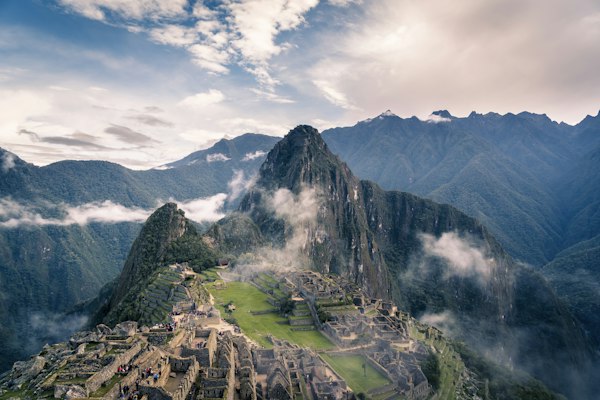
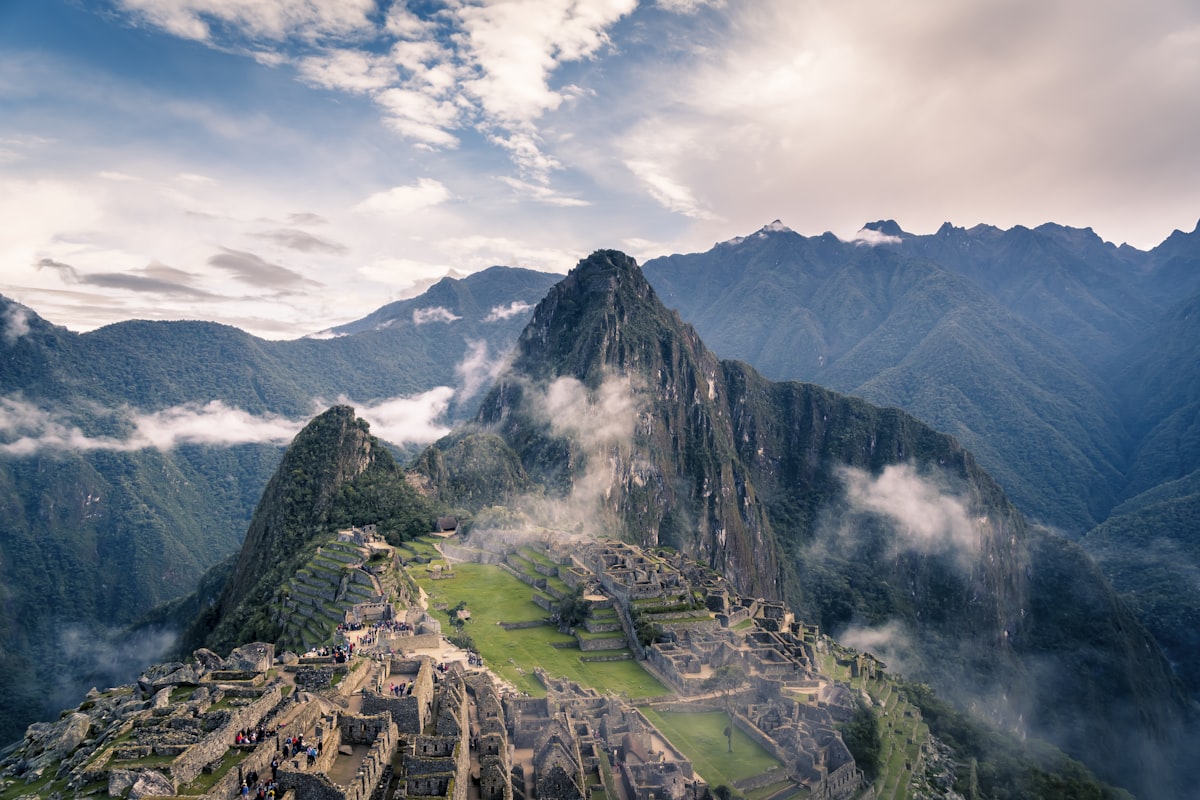
This is the one. The trek that started it all for most people's Peru bucket lists. You walk the same stone path the Incas built over 500 years ago, passing through ruins that seem to appear out of nowhere around every corner. Cloud forest drips with moss overhead, and every few hours the trail reveals another archaeological site that would be a major attraction anywhere else but here is just... part of the walk.
Day two is the big test. Dead Woman's Pass at 4,215 metres is a proper grind, and by the top your lungs and legs will be having a serious conversation with each other. But once you are over, it is mostly downhill through forest and past ruins that the bus tourists never get to see. Then comes dawn on day four: that walk to the Sun Gate, the mist clearing, and Machu Picchu appearing below you in golden morning light. We have seen people go completely silent at that moment. It earns the hype, every bit of it.
The catch: permits are limited to 500 people per day (including guides and porters), and peak months sell out three to six months ahead. Do not sleep on this one.
Price: $1,989 AUD per person with Mate in the Mountains
2. Salkantay Trek
5 days | 74 km | Moderate to Hard | Best: May to September
If the Inca Trail is the polished classic, Salkantay is its wilder, more adventurous sibling. Five days through terrain that changes so dramatically it feels like trekking through three different countries. You start in high grassland where the air is thin and the views stretch forever, climb to the foot of the Salkantay glacier at 4,630 metres (a wall of ice that makes you feel very small), and then descend through cloud forest into tropical jungle. One morning you are in a fleece. The next afternoon, parrots.
No permit lottery to stress about either, which means you can book closer to your dates. It is a tougher trek than the Inca Trail by a fair margin, nearly double the distance and 400 metres higher at the pass. But if you are fit and you want variety, raw landscapes and fewer people on the trail, Salkantay is absolutely worth it.
Price: $2,089 AUD per person with Mate in the Mountains
3. Lares Trek
3 to 4 days | 33 km | Moderate | Best: May to September
Lares is the trek you do when you want to experience Peru beyond the ruins. Instead of archaeological sites, you walk through remote Andean villages where people still weave textiles by hand using techniques passed down for generations and speak Quechua as their first language. There are hot springs, high mountain lakes, terraced hillsides, and a pace of life that feels like stepping back a few centuries.
It is gentler than the Inca Trail or Salkantay, sees far fewer trekkers, and the human connections along the way are what stick with you afterwards. You still finish with a train ride to Machu Picchu, so you get the grand finale without the permit stress.
4. Rainbow Mountain (Vinicunca)
1 day | 10 km return | Hard (altitude) | Best: May to September
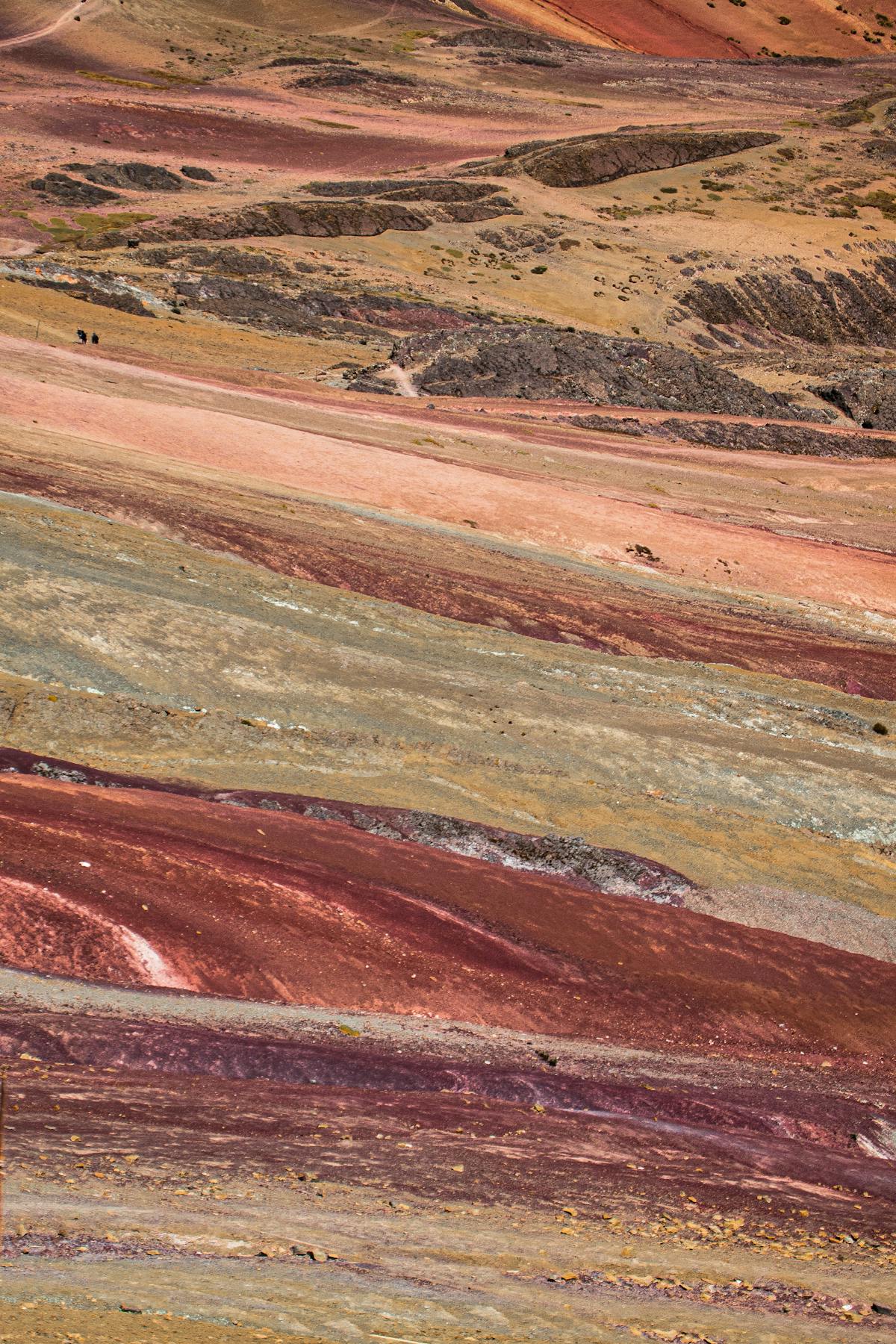
You have probably seen this one on Instagram a hundred times. For once, the reality matches the hype. Those striped mineral layers of red, gold, turquoise and lavender? Genuinely that vivid. It looks like someone painted the mountain, and standing up there seeing it with your own eyes is properly surreal.
The catch is altitude. You start walking at 4,600 metres and top out at 5,200. That is higher than Everest Base Camp. The trail is not technical at all, but at that height every step feels like you are breathing through a straw. Go early to beat the crowds and the afternoon clouds. And if you have just flown into Cusco, do not attempt this on day one. Give yourself a few days to acclimatise or your lungs will let you know exactly how they feel about it.
5. Ausangate Circuit
5 to 7 days | 70 km | Hard | Best: June to August
If Peru has a best-kept trekking secret, this is it. A full loop around Ausangate peak, the highest mountain in the Cusco region at 6,384 metres. Turquoise glacial lakes, steaming hot springs, terrain that looks like it belongs on another planet, and two passes above 5,000 metres. You might go entire days without seeing another tourist. Just you, the mountains, and the occasional herd of llamas staring at you like you are the weird one.
Not a beginner trek by any stretch. The altitude is serious and the weather can flip from sunshine to snowfall in an hour. But if you have some high-altitude experience and want something genuinely remote, Ausangate will reward you with landscapes that make you stop and stare every thirty minutes.
Cordillera Blanca
Head north from Lima to the mountain town of Huaraz and you hit the Cordillera Blanca, the highest tropical mountain range in the world. Peaks above 6,000 metres, glaciers everywhere, and trekking that rivals anything on the planet. The best part? It gets a fraction of the visitors that Cusco sees. This is where serious trekkers come to play.
6. Santa Cruz Trek
4 days | 50 km | Moderate | Best: May to September
Santa Cruz is the gateway drug to the Cordillera Blanca. Four days through valleys flanked by massive glaciated peaks, past lakes so blue they look computer-generated, and over a 4,750 metre pass where the views stretch to the horizon in every direction. It is well marked, well supported and absolutely stunning without being punishingly difficult.
Base yourself in Huaraz for a couple of days first to acclimatise. Do a day hike or two to get your legs going. Then tackle the Santa Cruz loop. For effort versus reward, it is one of the best treks anywhere in South America.
7. Laguna 69
1 day | 14 km return | Moderate to Hard | Best: May to September
Laguna 69 is a day hike from Huaraz and it is absolutely worth dragging yourself out of bed at stupid o'clock for. You climb steadily through alpine meadows dotted with wildflowers, past waterfalls that catch the morning light, and eventually arrive at a turquoise glacial lake sitting at 4,600 metres with the towering ice walls of Chacraraju behind it. The colour of the water is almost offensive in how beautiful it is. That deep, vivid, impossible turquoise that only glacial melt produces.
The trail is straightforward but the altitude makes it a proper workout. Give yourself at least two days in Huaraz to acclimatise first. And bring layers. The weather at 4,600 metres can go from sunshine to hail and back again in twenty minutes.
8. Huayhuash Circuit
10 to 12 days | 130 km | Very Hard | Best: June to August
Right. This is the big one. The Huayhuash Circuit is consistently ranked among the greatest long-distance treks on Earth, and after seeing the photos and hearing the stories from trekkers who have done it, we completely understand why. Twelve days circling the Cordillera Huayhuash, eight passes above 4,500 metres, constant views of enormous glaciated peaks, and the kind of mountain scenery that makes experienced trekkers go quiet. The famous Siula Grande from Touching the Void? Right along this route.
Make no mistake, this is a serious undertaking. The altitude is relentless, the days are long, and you are genuinely in the middle of nowhere. But if you are an experienced trekker looking for something that will test you physically and leave you speechless in equal measure, Huayhuash is the gold standard.
Off the Beaten Track
9. Colca Canyon
2 to 3 days | 30 km | Moderate | Best: May to November
Colca Canyon is twice as deep as the Grand Canyon. Let that actually sink in for a second. You descend over 1,000 metres to the valley floor, spend a night at the tiny oasis village of Sangalle (pool, cold beer, hammock, stars), and then climb back out the next morning. The climb starts around 3am to beat the heat and it is brutal in the best way. But the payoff is watching Andean condors ride the thermals above you as golden light creeps down the canyon walls. It is one of those moments that makes you go, "Yeah, that was worth the early alarm."
A great option if you are based in Arequipa, Peru's underrated second city. The canyon is just a few hours' drive away and the whole trek fits neatly into two to three days. Far less crowded than anything near Cusco.
10. Choquequirao Trek
4 to 5 days | 60 km | Hard | Best: May to September
They call it the other Machu Picchu, and it earns the name. Choquequirao is a massive Inca citadel perched on a ridge at 3,050 metres, and the only way to reach it is on foot. No trains, no buses, no cable cars. Two days hiking in, two days out, with a deep river valley to cross in between. On any given day you might share the ruins with a handful of other trekkers. Compare that to the thousands shuffling around Machu Picchu.
Only about 30 percent of the site has been excavated, which gives the whole place this raw, Indiana Jones quality. Terraces and walls emerging from the jungle, with nobody around except you and the condors overhead. There is talk of building a cable car, which would change everything. If you want to see Choquequirao the way it has been for centuries, go soon.
When Should You Actually Go?
Dry season runs May to September. That is your window for the best trekking conditions: blue skies, cold clear nights, dry trails and reliable weather. June to August is peak season, which means more people and higher prices, but also the most consistently good conditions.
April and October are the shoulder months and can be brilliant. Fewer crowds, often decent weather, and a bit of afternoon rain that usually clears by evening. November to March is wet season and many treks get muddy, slippery or close altogether. The Inca Trail shuts completely in February for maintenance.
Our advice? May or September. Best of both worlds. Good weather, smaller crowds, and better availability for permits and accommodation.
Trek Peru With Us
We run guided treks to Machu Picchu on both the Inca Trail and the Salkantay Trek. Small groups, local guides who genuinely know these mountains inside out, and all the logistics handled so you can focus on the walking and the views. Permits, transport, accommodation, meals, everything. You just show up fit, ready, and maybe a little nervous. We will take care of the rest.
Trek Peru with us
Check out our Inca Trail and Salkantay Trek with full itineraries, inclusions and pricing.
Browse Peru TreksGot questions?
Send us a message with your dates and fitness level. We will point you in the right direction.
Get in Touch