South America is, frankly, ridiculous for trekking. Glaciers that creak and groan underfoot. Volcanoes you can actually climb into. Ancient ruins hidden in cloud forest. Jungle so thick you cannot see ten metres ahead. The Andes run the full length of the continent like a spine, and every country along the way has trails that most Australians have never even heard of. This is where you go when you want hiking that genuinely changes how you see the world.
We have put together 13 hikes across six countries. Some are multi-day expeditions through proper wilderness. Others are single-day efforts that punch way above their weight. All of them are worth the long flight from Australia, and we say that from experience.
Chile and Patagonia
Patagonia is the heavyweight champion of trekking destinations. If you have ever seen a photo of jagged granite towers rising out of turquoise lakes with glaciers the size of suburbs, it was probably taken down here. Chilean Patagonia is wild, windswept and absolutely spectacular. The weather can go from brilliant sunshine to sideways rain to snow in the space of an hour. That is just what it does. You learn to love it.
1. Torres del Paine O-Circuit
Duration: 9 days | Distance: 130 km | Difficulty: Hard | Best time: November to March
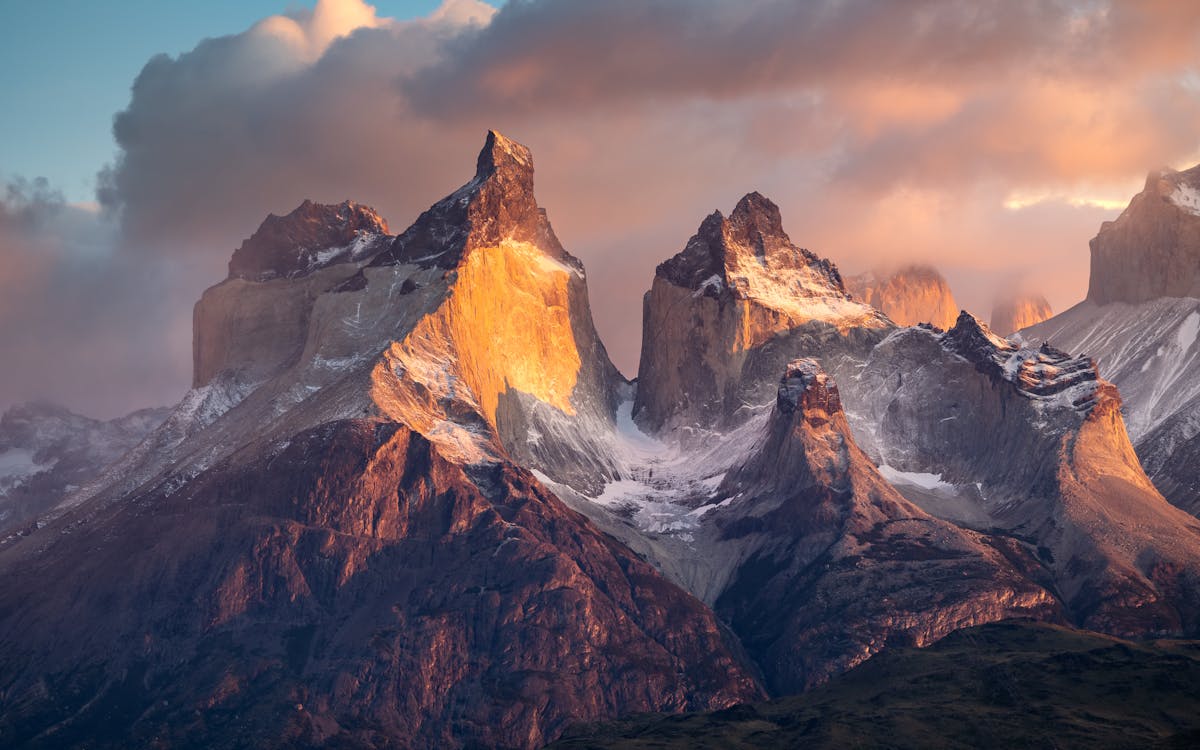
The full loop around the Paine massif, and the reason most people fly all the way to Patagonia. Nine days of trekking that delivers on every single front. You get the famous towers and the Grey Glacier (same as the shorter W-Trek), but you also get the backside of the circuit, which is wilder, quieter, and honestly more beautiful. The John Gardner Pass on day seven or eight is a genuine "stop and stare" moment. You climb through snow and wind to a ridgeline, and then suddenly the entire Southern Patagonian Ice Field opens up below you. It is vast and white and completely silent, and it makes you feel very small in the best possible way.
This is physically demanding. Nine days with a full pack through terrain that changes from ancient forest to glacier to exposed ridge. The Patagonian weather will test your waterproofs and your patience. But we take groups through here every season, and every single one comes back saying it was one of the best things they have ever done.
Check out our guided Torres del Paine O-Circuit trek
2. Torres del Paine W-Trek
Duration: 4 to 5 days | Distance: 80 km | Difficulty: Moderate | Best time: October to April
Do not have nine days? The W-Trek gives you the greatest hits in less than a week. The three arms of the W take you to the base of the famous towers, through the French Valley (where you are surrounded by granite walls on all sides), and along the edge of Grey Glacier. You sleep in refugios or campsites along the way, so no tent required if you do not want one. It is probably the most popular multi-day trek in all of South America, and for good reason. Just be prepared: popular means crowded during peak season. Get there early in the morning and you will have the trails more to yourself.
3. Villarrica Volcano
Duration: 1 day | Distance: 12 km return | Difficulty: Moderate to Hard | Best time: November to March
Want to climb an active volcano, peer inside the crater at glowing lava, and then toboggan back down on a plastic sled? That is not a joke. That is Villarrica. It is one of the most active volcanoes in Chile and you can hike right up to the rim. You need crampons and an ice axe for the upper slopes (all provided by the guide company), and the ascent takes about five hours through snow and ice with increasingly ridiculous views of the Chilean Lake District. The descent on the plastic sled is genuinely one of the most fun things you will ever do on a mountain. Absolute highlight.
Argentina
Cross the border into Argentina and the Andes keep delivering. Argentine Patagonia has its own set of iconic landscapes that are just as jaw-dropping as the Chilean side, from the granite spires of El Chalten to the frozen rivers of Perito Moreno. And if you want to go seriously high, Aconcagua is the tallest mountain in the entire western hemisphere.
4. Fitz Roy and Laguna de los Tres
Duration: 1 day | Distance: 25 km return | Difficulty: Moderate to Hard | Best time: November to March
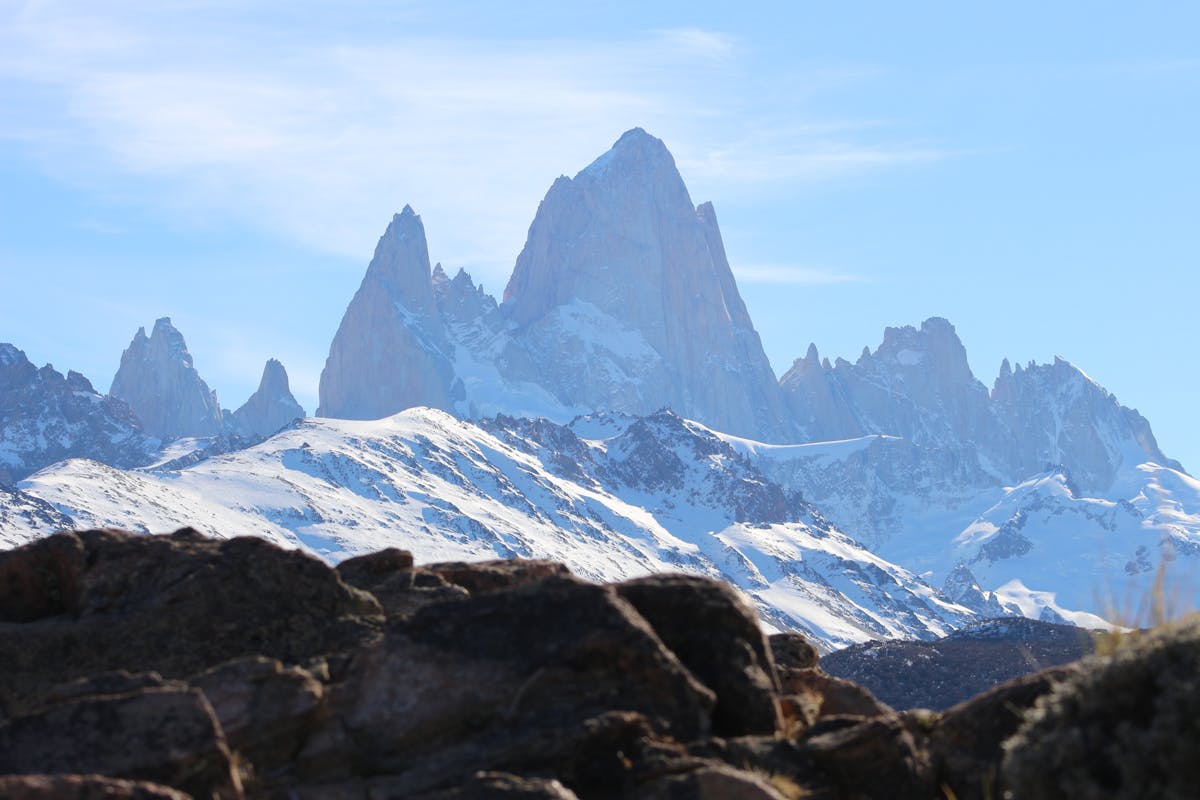
El Chalten is the trekking capital of Argentina, and this hike is the reason why. The trail winds from the village through lenga forest and along rivers for a few pleasant hours, lulling you into a false sense of security. Then comes the final hour: steep, relentless switchbacks that have you bent double and breathing hard. But when you crest that last ridge and see the jagged granite towers of Fitz Roy reflected in the milky blue glacial lake below, everything stops. It is one of those views that physically winds you. You know the Patagonia clothing brand logo? It is literally this mountain. Set your alarm for 4am to catch first light on the towers. You will not regret it.
5. Perito Moreno Glacier Trek
Duration: Half day | Distance: 3 to 4 km on ice | Difficulty: Easy to Moderate | Best time: Year round (best September to November)
Walking on top of a glacier is an experience that is hard to describe to someone who has not done it. The ice is an impossible shade of blue. Deep crevasses drop away beside you into darkness. The whole thing creaks and groans underfoot like a living thing. Perito Moreno is one of the few glaciers in the world that is still advancing, and you strap on crampons and walk right across it. The guided ice trek is about three to four hours on the glacier surface, and you do not need mountaineering experience. Just reasonable fitness and a willingness to trust those crampons. If you are anywhere near El Calafate, do this. It is non-negotiable.
6. Aconcagua
Duration: 15 to 20 days | Distance: Varies by route | Difficulty: Very Hard | Best time: December to February
At 6,961 metres, Aconcagua is the highest peak outside of Asia and the roof of the Americas. This is serious mountaineering territory. The normal route does not require technical climbing, which sounds reassuring until you realise the altitude is absolutely savage and the weather can turn lethal. Most expeditions take two to three weeks including acclimatisation days where you just sit there feeling terrible. Temperatures at high camp can drop below minus 30. You need proper expedition gear, excellent fitness, and the kind of patience that comes from spending two weeks slowly walking uphill. Not for casual hikers. But if you want to stand on top of the western hemisphere, there is only one way to get there.
Peru
Peru is a trekking powerhouse that consistently surprises people. The Sacred Valley alone has enough trails to fill a month, and the combination of Inca ruins, high Andean passes and terrain that changes from glaciers to jungle within a few days makes it one of the best trekking destinations on earth. We run guided treks on three routes in Peru, and honestly, picking a favourite is impossible. They are all brilliant in completely different ways.
7. Inca Trail to Machu Picchu
Duration: 4 days | Distance: 42 km | Difficulty: Moderate | Best time: May to September
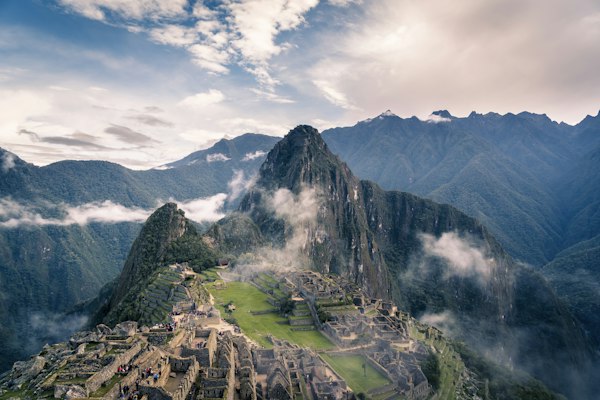
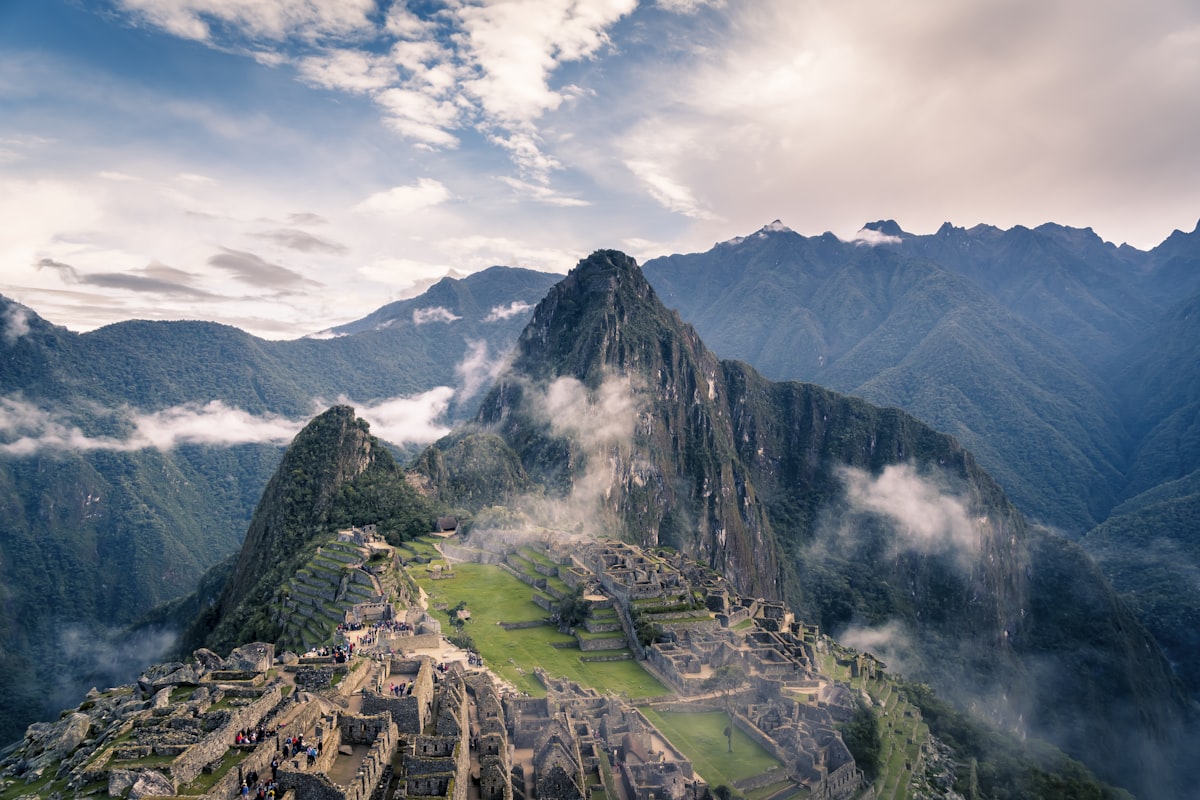
The classic for a reason. Four days through cloud forest and Inca ruins, arriving at Machu Picchu through the Sun Gate at dawn on the final morning. Dead Woman's Pass at 4,215 metres is the highest point and the toughest day, but the sense of achievement when you get over it is massive. The trail itself is over 500 years old, and the archaeological sites you pass along the way are stunning. Permits are capped at 500 people per day (including guides and porters), so you need to book months ahead for peak season. We know that sounds stressful, but that is what we are here for. The moment you walk through the Sun Gate as the morning mist clears and Machu Picchu appears below you is worth every bit of planning.
See our guided Inca Trail trek with full inclusions and pricing
8. Huayhuash Circuit
Duration: 10 to 12 days | Distance: 130 km | Difficulty: Hard | Best time: May to September
If you know, you know. The Huayhuash Circuit is regularly called one of the best treks on the planet, and it is criminally underrated compared to the Inca Trail. Ten to twelve days through the Cordillera Huayhuash with eight passes above 4,500 metres, turquoise glacial lakes around every corner, and mountain scenery that makes you want to cry (in a good way). Siula Grande, the peak from Touching the Void, towers above the trail. This is remote, high, and physically brutal. But it is also absolutely magnificent. Fair warning: people who do the Huayhuash tend to come back slightly insufferable because every other hike feels like a bit of a letdown afterwards.
9. Salkantay Trek
Duration: 5 days | Distance: 74 km | Difficulty: Moderate to Hard | Best time: April to October
The Salkantay is the wilder, quieter alternative to the Inca Trail, and honestly some people prefer it. Five days through glaciers, cloud forest and tropical jungle, all ending at Machu Picchu. Salkantay Pass at 4,630 metres is the high point, and you walk right up to the base of the Salkantay glacier itself, which is a surreal experience. The terrain changes dramatically every day. One morning you are above the snowline in full thermals. The next afternoon you are hiking through banana plantations in a t-shirt. There is no permit lottery, which makes it a brilliant backup if your Inca Trail dates are sold out. It also gets far fewer people on the trail, so you get more space, more silence, and more of that feeling of being properly out there.
Check out our guided Salkantay Trek with full itinerary
Colombia
10. Lost City Trek (Ciudad Perdida)
Duration: 4 to 6 days | Distance: 44 km return | Difficulty: Moderate to Hard | Best time: December to March
Ciudad Perdida was built around 650 AD, roughly 600 years before Machu Picchu. Let that sink in. It was hidden in the Sierra Nevada de Santa Marta jungle for centuries until the 1970s, and it is still only accessible on foot. The trek takes four to six days through dense tropical forest, crossing rivers, climbing stone staircases carved into the mountainside, and sleeping in hammocks at jungle camps while the forest hums around you. On day three or four you climb 1,200 ancient stone steps and emerge into the terraced city in the clouds. It is hot, humid and muddy. The mosquitoes are absolutely relentless. And it is one of the most incredible experiences in South America. This trek is growing fast in popularity, but it still feels genuinely wild and adventurous in a way that very few places can match.
Ecuador
Ecuador is tiny on the map but packs a ridiculous amount of adventure into a small country. The Avenue of Volcanoes runs through the centre of the highlands like a parade of snow-capped giants, and you can summit peaks here that would be headline attractions anywhere else in the world.
11. Cotopaxi Volcano
Duration: 2 days (1 day summit) | Distance: 8 km return (summit day) | Difficulty: Hard | Best time: August to January
Cotopaxi is one of the highest active volcanoes in the world at 5,897 metres, and it looks like a volcano a kid would draw: perfectly symmetrical, snow-capped, with a wisp of cloud at the top. The summit bid starts around midnight from a refuge at 4,800 metres. Headlamps, crampons, ice axes, climbing through darkness with nothing but the sound of your own breathing and the crunch of snow. If you time it right, you reach the crater rim just as the sun comes up and the views across to the other volcanoes of the Ecuadorian highlands are extraordinary. The altitude hits hard and not everyone makes it to the top. But if your body cooperates and the weather plays nice, standing on top of Cotopaxi at dawn is a moment you carry with you forever.
12. Quilotoa Loop
Duration: 3 days | Distance: 40 km | Difficulty: Moderate | Best time: June to September
The Quilotoa Loop is one of the most accessible multi-day hikes in Ecuador and a brilliant option if you want stunning scenery without the extreme altitude of the volcano climbs. The trail winds through rural Andean villages, deep canyons and patchwork farmland where llamas graze alongside the path. The grand finale is the Quilotoa crater lake, a vivid turquoise lagoon inside a collapsed volcano that looks almost too bright to be real. You sleep in village guesthouses, eat local food, and walk through communities that see relatively few tourists. It is lower key than the big mountain treks, but the landscapes are gorgeous and you actually get to connect with the people who live here. If you want something beautiful and a bit more relaxed, this is your trek.
Bolivia
13. Huayna Potosi
Duration: 2 to 3 days | Distance: 6 km (summit day) | Difficulty: Hard | Best time: May to October
Huayna Potosi at 6,088 metres is often called the easiest 6,000 metre peak in the world. Before you get too excited, "easiest" here is relative. It means technically straightforward for a mountain of that height, not that your nan could stroll up it. The normal route involves glacier travel, crampon work and some basic rope skills. Most trips run over two or three days from La Paz with a night at base camp and a night at high camp before a midnight summit push. The altitude is punishing and the final slope is steep enough to make you reconsider your definition of fun. But if you want to break the 6,000 metre barrier without months of expedition-style climbing, Huayna Potosi is one of the most accessible ways to do it. The views from the summit across the Bolivian Altiplano are the kind that make all the suffering worthwhile.
A Few Things Worth Knowing Before You Book
The seasons are flipped. South America is in the southern hemisphere (like us), so summer is December to February. But the best trekking windows vary wildly by region. Patagonia is best November to March. Peru's dry season runs May to September. Do not assume one set of dates works everywhere.
Altitude is no joke. Many of these treks go above 4,000 metres, and several push past 5,000 or even 6,000. If you are coming from sea level in Australia (which most of us are), give yourself at least two to three days to acclimatise before starting anything high. Cusco, La Paz and Huaraz are all great staging points where you can spend a couple of days adjusting, eating good food, and wondering why walking up stairs suddenly feels so hard.
Permits and bookings. The Inca Trail has strict permit limits and sells out months ahead. Others like the Salkantay or Torres del Paine O-Circuit have more flexibility, but the earlier you sort it out, the better your options for dates and accommodation.
Get fit before you go. These are not resort walks. Most multi-day treks on this list involve six to eight hours of walking per day at altitude with a pack on your back. Start training at least three months out. Hill walks, stair climbing and cardio are your best friends. Your future self, gasping for air on a 4,500 metre pass, will thank you.
Treks We Run in South America
We run guided treks in Peru and Chile with everything sorted for you: flights, permits, accommodation, local guides and gear lists. You just show up fit and ready to walk. We handle the rest.
- Inca Trail to Machu Picchu (4 days, from $1,989 per person)
- Salkantay Trek (5 days, from $2,089 per person)
- Torres del Paine O-Circuit (9 days, pricing on enquiry)
If something on this list has got you thinking, get in touch. We love talking about this stuff and we are happy to help you figure out which trek suits your fitness, your schedule and your appetite for adventure.
Browse our South America treks
Full itineraries, inclusions and pricing for our guided treks in Peru and Chile.
View All ToursGot questions?
Send us a message with your dates and fitness level. We will point you in the right direction.
Get in Touch