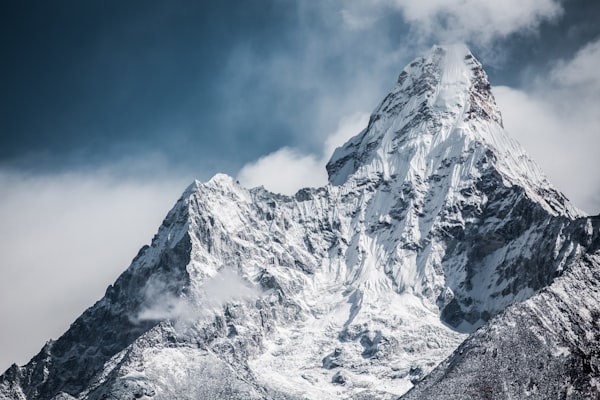
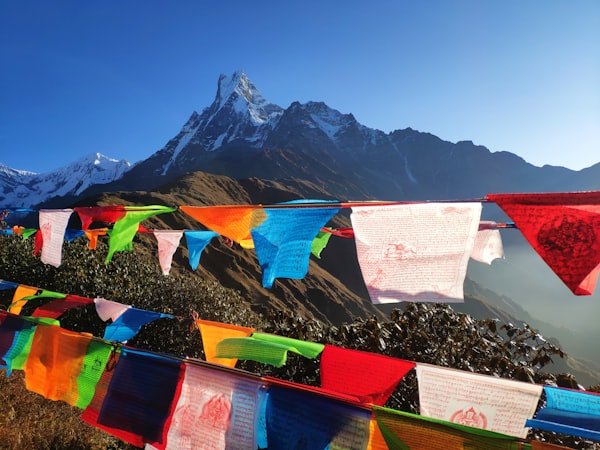
Look, there's a reason everyone puts Everest Base Camp at the top of their trekking bucket list. Standing at 5,364 metres with the biggest mountain on the planet looming above you, surrounded by prayer flags snapping in the wind and ice cracking somewhere in the distance... it just hits different. And here's the thing most people don't realise: you absolutely do not need to be some kind of ultra-fit freak to get there. Good preparation, a great guide and the willingness to walk slowly will get you to Base Camp.
The Route (and Why the Flight In Is Half the Fun)
The classic Everest Base Camp trek kicks off with a flight from Kathmandu to Lukla. If you've heard stories about that landing strip carved into the side of a mountain, they're all true. It's short, it's steep, and it's absolutely brilliant. From there, you walk. Through Sherpa villages where kids wave from doorsteps, across suspension bridges that sway over stomach-dropping gorges, and up through the Khumbu Valley with views that keep getting more ridiculous the higher you go.
You'll pass through Namche Bazaar (the Sherpa capital, buzzing with trekkers and surprisingly good coffee), Tengboche (where an ancient Buddhist monastery sits with the most insane mountain backdrop you've ever seen), Dingboche, Lobuche, and finally Gorak Shep before the last push to Base Camp. Most trips also include a pre-dawn slog up Kala Patthar (5,545 m) for a sunrise panorama of Everest that will genuinely make you tear up. We've seen it happen plenty of times. No shame in it.
All up, it's 12 to 14 days and about 130 km return. You sleep in tea houses every night, so you can leave the tent at home.
Alright, But How Hard Is It Actually?
Let's not sugar-coat it. EBC is a proper challenge. But it's not extreme. The trails are well-worn and well-maintained. You're walking, not climbing. Nobody's asking you to use ropes or ice axes.
The real test is altitude. Above 3,500 metres, your body starts going "hang on a sec" as the oxygen thins out. By the time you're at 5,364 metres, even tying your bootlaces can leave you a bit puffed. That's totally normal.
Thousands of trekkers knock this off every year, and plenty of them are first-timers who'd never done anything like it before. The secret? Acclimatisation days. You spend rest days at Namche Bazaar and Dingboche letting your body catch up. Walk slowly. Drink water like it's your job (3 to 4 litres a day, minimum). And listen to your guide when they tell you to ease off. If you can comfortably hike 15 to 20 km with a daypack on a weekend back home, you've got this.
When Should You Go?
Two golden windows: March to May (spring) and September to November (autumn). Autumn is the crowd favourite. Crystal clear skies, stable weather, the mountains just sitting there looking absolutely unreal day after day. Spring is a touch warmer and you'll catch rhododendrons blooming pink and red at the lower altitudes, which is pretty special.
If you're coming from Australia, autumn lines up perfectly with end-of-year leave and school holidays. Spring is a great excuse to escape the fading Aussie summer. Whatever you do, skip the monsoon months (June to August). The trails turn to mud and the mountains hide behind clouds for weeks.
What We Sort Out (So You Don't Have To)
Our Everest Base Camp trek is the full package. Experienced local guides who know this trail like the back of their hand. Porters to lug your main gear so you only carry a daypack. All your tea house beds, meals on the trail, trekking permits, airport transfers and domestic flights to and from Lukla. Basically everything except your flight to Kathmandu and your snack stash.
You'll want some spending money for extras along the way. Hot showers cost a few bucks at altitude (and feel absolutely glorious). The odd celebratory beer in Namche won't pay for itself. And you'll almost certainly want to grab a few souvenirs. But the logistics? That's on us. You just walk.
Getting Yourself Trek-Fit
Give yourself 10 to 12 weeks and focus on building comfortable endurance. Nobody cares how fast you can walk. Seriously.
- Get out on proper day hikes, working up to 15-20 km with a loaded daypack. Find the hilliest trails you can. Flat coastal walks won't cut it here.
- Build a cardio base with running, cycling or swimming a few times a week. You want your lungs happy at altitude, and that takes aerobic fitness.
- Don't skip leg day. Squats, lunges, step-ups. Your knees will be doing a LOT of work on the downhill sections, and they'll repay you with pain if you haven't strengthened them up.
- If you're in a flat city (looking at you, Melbourne), find a tall building with a fire stairwell and do laps with your pack on. It's boring and sweaty and it works a treat.
The benchmark? If you can comfortably hike 6 to 8 hours over hilly terrain with a pack and still feel human at the end of it, you're good to go.
What Goes in the Bag
Your porter carries the big duffel (up to 15 kg) and you carry a daypack with the day's essentials. Pack light. Then take out another 20%.
The stuff you absolutely cannot skip:
- Waterproof hiking boots that are properly broken in (this is not the time for brand new shoes)
- Layers, layers, layers: thermal base, fleece mid-layer, waterproof shell jacket
- A warm down jacket for freezing tea house evenings and those high-altitude mornings
- A sleeping bag rated to at least -10 °C (or you can rent a decent one in Kathmandu)
- Trekking poles, a headlamp, and serious sunscreen plus lip balm with SPF
- Water purification tablets or a filter bottle (your stomach will thank you)
We send a detailed gear list when you book. And if you don't want to lug everything from Australia, Kathmandu's Thamel district is packed with trekking shops where you can rent or buy gear for a fraction of what you'd pay at home.
What Does It Cost?
Our Everest Base Camp trek starts from $2,389 AUD per person. That covers guides, porters, accommodation, meals, permits, domestic flights and transfers. For the personal spending money side of things, budget roughly $500 to $800 AUD for snacks, hot showers (absolute luxury at altitude), souvenirs, tips for your guides and porters, and a night or two exploring Kathmandu before and after the trek.
Flights from Australia to Kathmandu usually land between $600 and $1,200 AUD return, depending on when you book and what time of year you're flying. And please, please get travel insurance that covers altitude trekking and helicopter evacuation. It's not the place to cheap out.
Trail-Tested Tips
We've walked the EBC trail hundreds of times. These are the things we wish every trekker knew before they set off.
- "Bistaari, bistaari" (slowly, slowly). You'll hear this constantly on the trail and it's not just a cute phrase. Walking at a pace where you can comfortably chat is genuinely the best thing you can do to avoid altitude sickness. Leave the competitive speed-hiking for back home.
- Think you're drinking enough water? Drink more. Dehydration at altitude creeps up on you fast and makes every symptom worse. Three to four litres a day, minimum.
- Got a headache? Feeling a bit dizzy? Stomach being weird? Tell your guide immediately. Nothing is too small to mention. They've seen it all a thousand times and they know exactly what to do.
- Pack Tim Tams. Seriously. Tea house food is solid but after a week of dal bhat and noodle soup, a stash of familiar snacks from home will do wonders for morale. Muesli bars, trail mix, lollies, whatever gets you through.
- Everyone focuses on the climb up, but the descent is where your body really cops it. Save energy for the walk back down. Your knees are about to find out what they're made of.
Not Sure EBC Is the One? Other Nepal Treks Worth a Look
If the timing doesn't work or you want to start with something slightly different, we've got you covered. The Annapurna Circuit is a brilliant 12-day trek with everything from rice paddies to 5,400 m passes. The Manaslu Circuit is quieter, wilder and feels properly remote. And if you're short on time but still want big mountain views that'll make your jaw drop, check out Langtang Valley or Pikey Peak.
Ready to trek to Everest Base Camp?
See our full itinerary, day-by-day breakdown and available dates.
View Trek DetailsGot questions?
Send us a message and we will help you figure out if EBC is the right trek for you.
Get in Touch